
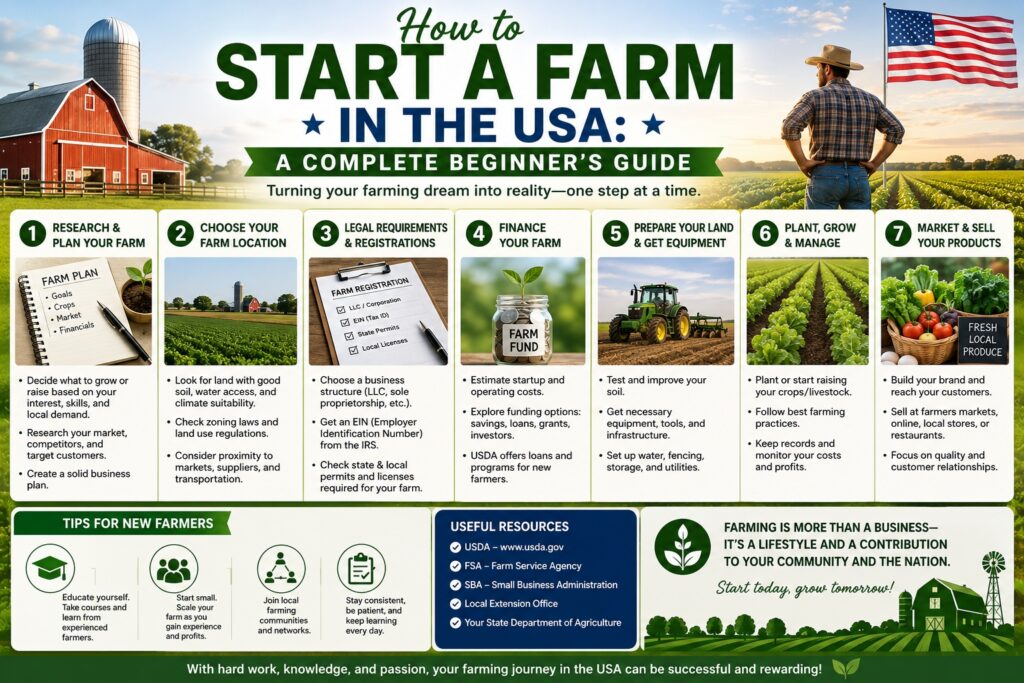
How to Start a Farm in the USA: A Complete Beginner’s Guide : Starting a farm in the United States can be a rewarding and profitable venture. With growing demand for fresh food, organic produce, livestock products, and sustainable farming practices, agriculture remains one of the most important industries in America. However, successful farming requires careful planning, investment, and knowledge of agricultural practices.
Whether you want to grow crops, raise livestock, or start a mixed farm, this guide will walk you through the essential steps to start a farm in the USA.
How to Start a Farm in the USA?
The United States offers numerous opportunities for new farmers, including:
- Access to large agricultural markets
- Advanced farming technologies
- Government support programs
- Agricultural loans and grants
- Strong demand for local food products
- Diverse climates suitable for various crops and livestock
With proper planning and management, farming can provide both financial returns and a sustainable lifestyle.
Step 1: Decide What Type of Farm You Want
The first step is choosing the type of farm you want to operate.
Crop Farming
Crop farms focus on growing products such as:
- Corn
- Soybeans
- Wheat
- Rice
- Cotton
- Fruits
- Vegetables
Livestock Farming
Livestock farms raise animals such as:
- Cattle
- Dairy cows
- Chickens
- Pigs
- Sheep
- Goats
Mixed Farming
Many farmers combine crop production and livestock operations to diversify income and reduce risks.
Specialty Farming
Specialty farms focus on niche products such as:
- Organic vegetables
- Herbs
- Mushrooms
- Honey
- Flowers
- Aquaculture
Choose a farming enterprise based on your interests, skills, budget, and local market demand.
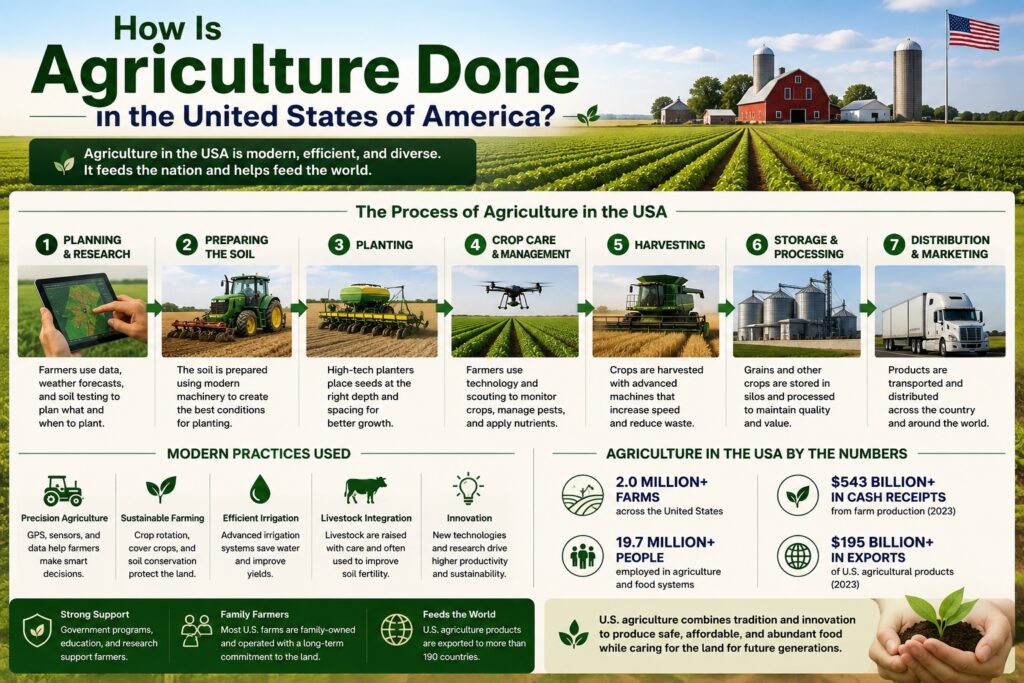
Related Post : How Is Agriculture Done in the USA?
Step 2: Create a Farm Business Plan
A business plan is essential for long-term success.
Your farm business plan should include:
- Farm goals
- Products to be produced
- Target market
- Startup costs
- Operating expenses
- Marketing strategy
- Revenue projections
- Risk management plan
A detailed business plan can also help secure financing from banks and agricultural lenders. How to Start a Farm in the USA
Step 3: Choose the Right Location
Location plays a major role in farm profitability.
Consider factors such as:
- Soil quality
- Water availability
- Climate conditions
- Land prices
- Access to roads and markets
- Local regulations
For example:
- Iowa and Illinois are excellent for corn and soybean production.
- California is ideal for fruits and vegetables.
- Texas offers opportunities for cattle ranching.
- Florida is known for citrus farming. How to Start a Farm in the USA
Step 4: Purchase or Lease Farmland
Buying farmland requires significant capital, so many beginners start by leasing land.
When selecting farmland, evaluate:
- Soil fertility
- Drainage
- Irrigation potential
- Existing infrastructure
- Accessibility
Conduct soil testing before making a final decision. How to Start a Farm in the USA
Step 5: Register Your Farm Business
Most farms operate as legal businesses.
Common business structures include:
- Sole Proprietorship
- Partnership
- Limited Liability Company (LLC)
- Corporation
Registering your farm helps protect your assets and allows access to various financial programs. How to Start a Farm in the USA
Step 6: Obtain Necessary Licenses and Permits
Depending on your farm type and state regulations, you may need:
- Business licenses
- Water permits
- Livestock permits
- Food handling certifications
- Organic certification
Always check local and state agricultural regulations before starting operations. How to Start a Farm in the USA
Step 7: Secure Financing
Starting a farm often requires substantial investment.
Common expenses include:
- Land
- Equipment
- Seeds
- Fertilizers
- Livestock
- Buildings
- Irrigation systems
Funding options include:
- Agricultural loans
- Farm credit institutions
- Government grants
- Private investors
- Personal savings
Proper financial planning helps reduce risks during the startup phase. How to Start a Farm in the USA
Step 8: Purchase Equipment and Supplies
The equipment you need depends on the type and size of your farm.
Common farm equipment includes:
- Tractors
- Plows
- Seed drills
- Harvesters
- Irrigation systems
- Sprayers
- Livestock feeding equipment
Many new farmers start with used equipment to reduce costs.
Step 9: Develop a Soil Fertility Program
Healthy soil is the foundation of successful farming.
Best practices include:
- Soil testing
- Balanced fertilizer application
- Cover cropping
- Crop rotation
- Organic matter management
Maintaining soil health improves crop yields and long-term productivity.
Step 10: Select High-Quality Seeds or Livestock
Choosing quality genetics is critical.
For crop farms:
- Use certified seeds
- Select disease-resistant varieties
- Choose varieties suitable for local climate
For livestock farms:
- Purchase healthy animals from reputable breeders
- Focus on productive and disease-resistant breeds
Good genetics lead to higher productivity and profitability.
Step 11: Implement Irrigation and Water Management
Reliable water sources are essential for most farming operations.
Popular irrigation methods include:
- Drip irrigation
- Sprinkler systems
- Center pivot irrigation
- Surface irrigation
Efficient water management reduces costs and improves crop performance. How to Start a Farm in the USA
Step 12: Manage Pests and Diseases
Pests and diseases can significantly reduce yields.
Use Integrated Pest Management (IPM) practices such as:
- Crop rotation
- Resistant varieties
- Field monitoring
- Biological controls
- Responsible pesticide use
Regular scouting helps identify problems before they become severe. How to Start a Farm in the USA
Step 13: Hire Labor if Needed
Large farms often require additional workers.
Labor needs may include:
- Planting
- Harvesting
- Livestock care
- Equipment operation
- Packaging and transportation
Proper training improves productivity and workplace safety.
Step 14: Market Your Farm Products
Producing crops is only part of the business. You must also find buyers.
Marketing options include:
- Farmers markets
- Grocery stores
- Restaurants
- Food processors
- Wholesale distributors
- Online sales
- Direct-to-consumer sales
Developing strong marketing channels increases profitability.
Step 15: Use Modern Farming Technology
Technology helps farmers improve efficiency and reduce costs.
Modern tools include:
- GPS-guided tractors
- Drones
- Precision agriculture software
- Soil sensors
- Weather monitoring systems
- Automated irrigation systems
Technology-driven farming is becoming increasingly important in modern agriculture.
Common Challenges for New Farmers
New farmers often face challenges such as:
- High startup costs
- Weather uncertainty
- Market fluctuations
- Labor shortages
- Pest outbreaks
- Equipment expenses
Planning ahead and managing risks can help overcome these challenges.
Tips for Success
- Start small and expand gradually.
- Learn from experienced farmers.
- Keep accurate financial records.
- Focus on soil health.
- Stay informed about market trends.
- Use modern agricultural technology.
- Diversify income sources when possible.
Conclusion
Starting a farm in the USA requires careful planning, investment, and dedication. By selecting the right type of farm, creating a solid business plan, choosing suitable land, and implementing modern farming practices, new farmers can build a successful and profitable agricultural business. While farming comes with challenges, the opportunities for growth and long-term success remain strong in the American agricultural industry.