How to Grow Corn Farming Guide : Corn, also known as maize, is one of the most widely cultivated cereal crops in the world. It is a versatile crop used for human consumption, animal feed, industrial products, and biofuel production. Due to its high demand and excellent yield potential, corn farming is a profitable agricultural business for farmers. Successful corn cultivation requires proper land preparation, quality seeds, balanced nutrition, effective irrigation, and timely pest management. This guide explains the complete process of corn farming from planting to harvesting.
How to Grow Corn: Complete Corn Farming Guide : Climate Requirements
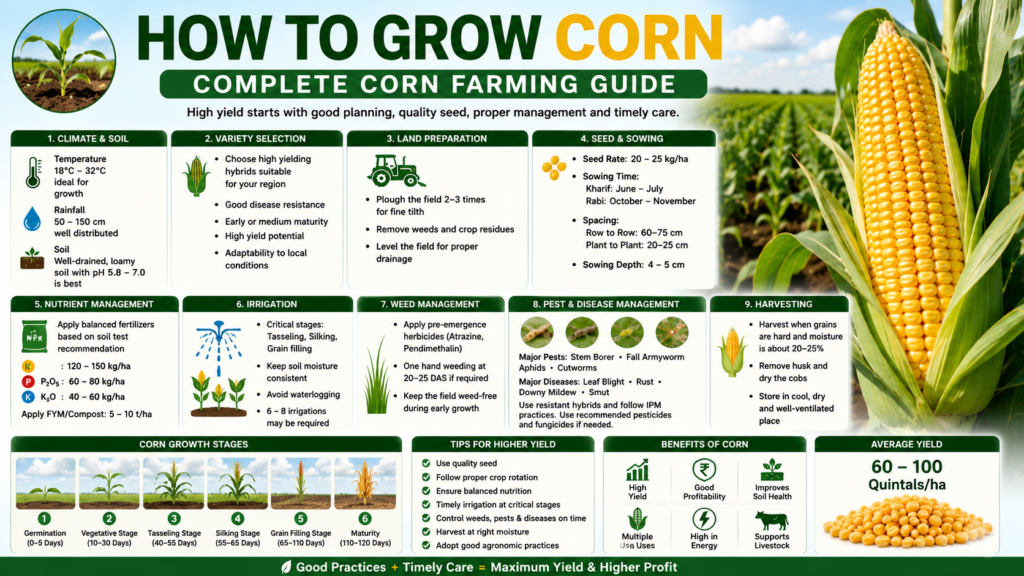
Corn is a warm-season crop that grows best in areas with plenty of sunlight and moderate rainfall. The ideal temperature for corn cultivation ranges between 18°C and 30°C. Temperatures below 10°C can slow germination and plant growth, while extremely high temperatures may affect pollination and grain formation.
Corn requires about 500–800 mm of rainfall during its growing season. However, irrigation can supplement rainfall in areas with limited moisture. Adequate sunlight is essential for photosynthesis and high grain production.

How to Grow Corn: Complete Corn Farming Guide : Soil Requirements
Corn can be grown in a wide range of soil types, but well-drained fertile loam soils are considered ideal. The soil should have good water-holding capacity and proper drainage.
The recommended soil pH for corn cultivation is between 5.8 and 7.0. Heavy clay soils with poor drainage should be avoided because waterlogging can damage the root system and reduce yields.
A soil test before planting is recommended to determine nutrient requirements and improve fertilizer management.
How to Grow Corn: Complete Corn Farming Guide : Land Preparation
Proper land preparation is the foundation of successful corn farming. Begin by plowing the field deeply to loosen the soil and remove weeds. Follow this with two or three harrowings to break soil clods and create a fine seedbed.
Incorporate 10–15 tons of well-rotted farmyard manure or compost per hectare during land preparation. Organic matter improves soil fertility, water retention, and microbial activity.
The field should be leveled properly to ensure uniform irrigation and efficient drainage.
Selection of Corn Varieties
Choosing the right corn variety is essential for achieving high yields. Farmers should select varieties suitable for their local climate, soil conditions, and market demand.
Common types of corn include:
- Hybrid Corn
- Sweet Corn
- Popcorn
- Dent Corn
- Flint Corn
- Baby Corn
Hybrid varieties are generally preferred because they offer higher yields, better disease resistance, and improved adaptability to environmental conditions.
How to Grow Corn: Complete Corn Farming Guide : Planting Time
Corn can be grown during different seasons depending on regional climatic conditions. In many regions, corn is planted during spring or the rainy season.
The best planting time is when soil temperatures reach at least 10°C and there is adequate moisture available for seed germination.
Timely planting helps the crop establish quickly and utilize available resources efficiently.

Seed Rate and Seed Treatment
The recommended seed rate for grain corn is approximately 18–25 kilograms per hectare, depending on the variety and planting density.
Before sowing, seeds should be treated with recommended fungicides and insecticides to protect against seed-borne diseases and soil pests. Seed treatment improves germination and promotes healthy plant establishment.
Using certified, high-quality seeds ensures better crop performance and higher yields.
Planting Method and Spacing
Corn is usually planted using seed drills or precision planters.
Recommended spacing:
- Row-to-row distance: 60–75 cm
- Plant-to-plant distance: 20–25 cm
- Planting depth: 4–6 cm
Proper spacing allows adequate sunlight penetration, air circulation, and nutrient uptake. It also helps reduce disease incidence and improves crop management.
Nutrient Management
Corn is a heavy feeder and requires adequate nutrients throughout its growth cycle. Balanced fertilization is essential for achieving high yields.
A general fertilizer recommendation per hectare is:
- Nitrogen (N): 120–180 kg
- Phosphorus (P₂O₅): 60–80 kg
- Potassium (K₂O): 40–60 kg
Nitrogen should be applied in split doses. A portion is applied at planting, while the remaining amount is supplied during vegetative growth and tasseling stages.
Micronutrients such as zinc, sulfur, and boron may also be required depending on soil conditions.
Irrigation Management
Water management plays a crucial role in corn production. Although corn can tolerate short dry periods, moisture stress during critical growth stages can significantly reduce yields.
Critical irrigation stages include:
- Germination and seedling establishment
- Knee-high stage
- Tasseling stage
- Silking stage
- Grain filling stage
Avoid excessive irrigation, as waterlogging can cause root diseases and nutrient loss. Proper drainage is equally important for healthy crop growth.
How to Grow Corn: Complete Corn Farming Guide : Weed Management
Weeds compete with corn plants for nutrients, water, and sunlight. Effective weed control during the first 40–50 days after planting is essential.
Weed management practices include:
- Manual weeding
- Mechanical cultivation
- Mulching
- Application of recommended herbicides
Keeping the field weed-free during the early growth stages helps maximize crop yield and quality.
How to Grow Corn: Complete Corn Farming Guide : Pest Management
Several insect pests can damage corn crops and reduce productivity.
Common corn pests include:
- Fall Armyworm
- Stem Borer
- Corn Earworm
- Aphids
- Cutworms
Regular field scouting helps detect pest infestations early. Integrated Pest Management (IPM) practices, including biological control agents, pheromone traps, and selective insecticides, are effective methods for controlling pests.
Timely intervention prevents severe crop losses and maintains healthy plant growth.
How to Grow Corn: Complete Corn Farming Guide : Disease Management
Corn is susceptible to various fungal, bacterial, and viral diseases.
Common diseases include:
- Leaf Blight
- Rust
- Downy Mildew
- Smut
- Stalk Rot
Disease management strategies include:
- Using disease-resistant varieties
- Practicing crop rotation
- Maintaining field sanitation
- Avoiding excessive irrigation
- Applying recommended fungicides when necessary
Early disease detection and treatment are important for protecting crop yield.
How to Grow Corn: Complete Corn Farming Guide : Harvesting
Corn is ready for harvest when the kernels become hard and reach physiological maturity. The husks turn brown, and the ears begin to dry naturally.
Depending on the variety, corn generally matures within 90–140 days after planting.
Harvesting should be done during dry weather to reduce grain moisture and minimize post-harvest losses.
Mechanical harvesters are commonly used for large-scale farming, while manual harvesting remains popular among small-scale farmers. How to Grow Corn: Complete Corn Farming Guide
Post-Harvest Handling
After harvesting, corn ears are dried thoroughly before shelling. Proper drying reduces grain moisture content to about 12–14%, which is suitable for safe storage.
The grain should be cleaned and stored in dry, well-ventilated facilities. Proper storage helps prevent insect infestation, fungal growth, and quality deterioration.
Regular inspection of stored grain ensures long-term preservation and market value.
How to Grow Corn: Complete Corn Farming Guide : Yield and Profitability
Corn has excellent yield potential when managed properly. Average grain yields range from 5 to 12 tons per hectare depending on the variety, climate, and farming practices.
Hybrid corn varieties under good management can produce even higher yields. Because corn has strong demand from food, livestock, and industrial sectors, it offers significant income opportunities for farmers.
Efficient production practices can improve profitability while reducing production costs. How to Grow Corn: Complete Corn Farming Guide
Conclusion
Corn farming is a highly rewarding agricultural venture with strong market demand and excellent yield potential. Success in corn cultivation depends on proper land preparation, quality seed selection, balanced fertilization, adequate irrigation, effective weed control, and timely pest and disease management. By adopting modern farming techniques and following scientific cultivation practices, farmers can achieve higher yields, improve grain quality, and increase overall farm profitability.