How to Grow Soybeans (Soybean Farming Guide) : Soybean is one of the most important oilseed and protein-rich crops grown worldwide. It is widely used for producing edible oil, animal feed, soy flour, soy milk, tofu, and many other food products. Due to its high market demand and profitability, soybean farming has become a popular choice among farmers. With proper cultivation practices, farmers can achieve high yields and good profits. This guide explains the complete process of soybean farming from land preparation to harvesting.
How to Grow Soybeans (Soybean Farming Guide) : Climate Requirements
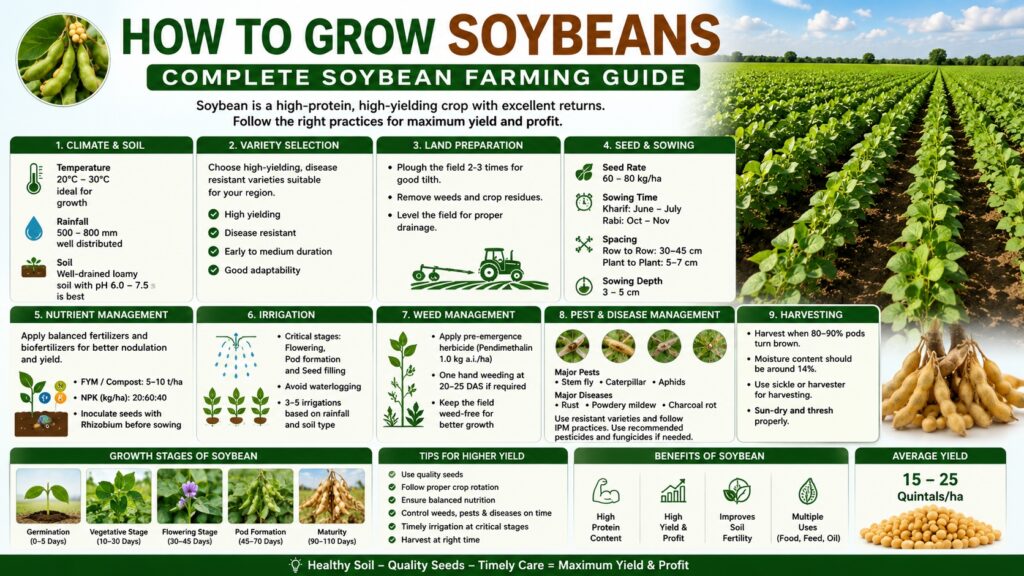
Soybeans grow best in warm and humid climates. The ideal temperature for soybean cultivation ranges between 20°C and 30°C. The crop requires moderate rainfall of about 500–900 mm during the growing season. Excessive rainfall and waterlogging can damage the crop and reduce yields.
Soybeans are mainly grown during the rainy season (Kharif season) in many countries. Adequate sunlight is essential for healthy plant growth and pod development.
How to Grow Soybeans (Soybean Farming Guide) : Soil Requirements
Soybeans can be cultivated in various soil types, but well-drained loamy and clay loam soils are considered the most suitable. The soil should have good fertility and organic matter content.
The ideal soil pH for soybean cultivation is between 6.0 and 7.5. Waterlogged soils should be avoided because soybean roots are sensitive to excess moisture. Proper drainage helps prevent root diseases and improves plant growth.

How to Grow Soybeans (Soybean Farming Guide) : Land Preparation
Proper land preparation is crucial for successful soybean farming. Begin by plowing the field deeply to loosen the soil and remove weeds. After the initial plowing, perform two or three harrowings to create a fine seedbed. How to Grow Soybeans (Soybean Farming Guide)
Apply 8–10 tons of well-decomposed farmyard manure or compost per hectare during the final land preparation. Level the field properly to ensure uniform water distribution and prevent waterlogging.
Selection of Improved Varieties
Choosing the right variety is one of the most important factors affecting soybean production. Farmers should select high-yielding, disease-resistant varieties suitable for their region and climate.
Some popular soybean varieties include:
- JS 95-60
- JS 20-29
- JS 20-34
- NRC 37
- NRC 86
- RVS 2001-4
- MACS 1407
- PS 1225
Consult local agricultural experts or extension officers to choose the best variety for your area.
How to Grow Soybeans (Soybean Farming Guide) : Sowing Time
The ideal sowing time for soybean depends on regional climatic conditions. In most regions, soybean is sown at the onset of the rainy season.
Generally, sowing is done from June to July. Timely sowing helps the crop utilize available moisture efficiently and achieve better yields. Delayed sowing may result in lower productivity and increased pest and disease incidence. How to Grow Soybeans (Soybean Farming Guide)
Seed Rate and Seed Treatment
The recommended seed rate for soybean cultivation is approximately 60–80 kilograms per hectare, depending on the variety and seed size.
Before sowing, seeds should be treated with appropriate fungicides to protect them from seed-borne diseases. Seed treatment with Rhizobium culture is also highly recommended. Rhizobium bacteria help fix atmospheric nitrogen, reducing the need for nitrogen fertilizers and improving soil fertility.
Sowing Method
Soybean seeds are usually sown using seed drills or by line sowing. Maintaining proper spacing is essential for healthy crop growth.
Recommended spacing:
- Row-to-row distance: 30–45 cm
- Plant-to-plant distance: 5–10 cm
- Sowing depth: 3–5 cm
Proper spacing allows adequate sunlight penetration, air circulation, and nutrient availability.
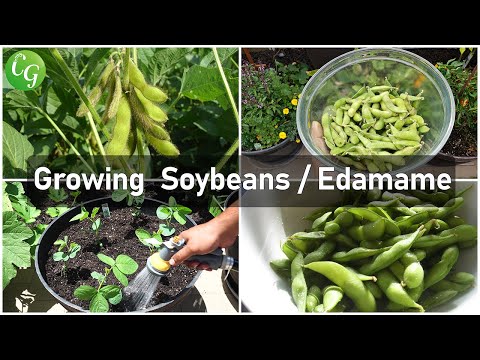
Nutrient Management
Although soybean can fix atmospheric nitrogen through Rhizobium bacteria, balanced fertilization is necessary for high yields.
A general fertilizer recommendation per hectare is:
- Nitrogen (N): 20–30 kg
- Phosphorus (P₂O₅): 60–80 kg
- Potassium (K₂O): 20–40 kg
Apply fertilizers at the time of sowing. Soil testing is recommended before fertilizer application to determine the exact nutrient requirements.
Micronutrients such as zinc, sulfur, and boron may also be applied if deficiencies are observed.
Irrigation Management
Soybeans are generally grown under rainfed conditions, but supplemental irrigation can significantly improve yields during dry periods.
Critical growth stages requiring adequate moisture include:
- Germination stage
- Flowering stage
- Pod formation stage
- Seed filling stage
Avoid excessive irrigation because waterlogging can damage roots and reduce productivity. Ensure proper drainage throughout the crop cycle. How to Grow Soybeans (Soybean Farming Guide)
Weed Management
Weeds compete with soybean plants for nutrients, water, and sunlight. Effective weed control is necessary during the first 40–45 days after sowing.
Common weed management practices include:
- Manual weeding
- Mechanical cultivation
- Use of recommended herbicides
Two weedings, one at 20–25 days and another at 40–45 days after sowing, usually provide good weed control. How to Grow Soybeans (Soybean Farming Guide)
Pest Management
Several insect pests can affect soybean crops. Common pests include:
- Stem fly
- Girdle beetle
- Tobacco caterpillar
- Whitefly
- Leaf-eating caterpillars
Regular field monitoring is essential to detect pest infestations early. Integrated Pest Management (IPM) practices such as crop rotation, biological control, and recommended insecticides help reduce pest damage. How to Grow Soybeans (Soybean Farming Guide)
Disease Management
Soybeans are susceptible to various fungal, bacterial, and viral diseases.
Common diseases include:
- Rust
- Yellow Mosaic Virus
- Anthracnose
- Root Rot
- Charcoal Rot
Preventive measures include:
- Using certified seeds
- Growing disease-resistant varieties
- Seed treatment before sowing
- Maintaining field sanitation
- Following crop rotation practices
Timely fungicide application may be necessary when disease symptoms appear.
Harvesting
Soybean crops are generally ready for harvest within 90–120 days after sowing, depending on the variety.
Signs of maturity include:
- Leaves turning yellow and dropping
- Pods becoming brown and dry
- Seeds hardening inside pods
Harvesting should be done when moisture content is low to minimize losses. Delayed harvesting may result in pod shattering and yield reduction. How to Grow Soybeans (Soybean Farming Guide)
Threshing and Storage
After harvesting, plants are dried properly before threshing. Threshing can be done manually or with machines.
The harvested seeds should be dried until their moisture content reaches around 10–12%. Proper drying prevents fungal growth and maintains seed quality.
Store soybean seeds in clean, dry, and well-ventilated storage facilities. Regular inspection helps prevent damage from insects and rodents.
Yield and Profitability
With proper management practices, soybean yields typically range from 2 to 4 tons per hectare. High-yielding varieties combined with good agronomic practices can produce even better results.
Soybean farming offers excellent profit potential because of the growing demand for soybean oil, animal feed, and protein-rich food products. Farmers who adopt modern farming techniques can significantly increase productivity and farm income. How to Grow Soybeans (Soybean Farming Guide)
Conclusion
Soybean farming is a profitable agricultural enterprise when managed properly. Success depends on selecting suitable varieties, preparing the land well, sowing at the right time, maintaining proper nutrition, controlling weeds, pests, and diseases, and harvesting at the correct stage. By following scientific cultivation practices, farmers can achieve higher yields, improve soil fertility, and increase overall profitability from soybean production.
This article is suitable for a farming blog, agriculture website, or SEO content about soybean cultivation.